What to write
Say what they did, then say what it changed. "Thank you for everything" asks the reader to fill in the blank themselves. "Thank you for driving two hours on a weekday" does the work for them, and is the version they remember.
Free, with their name and your message, sent as a link, a video or an image
A real thank-you names what the person actually did. Send one that arrives as something they open, so it reads as deliberate rather than polite.
Free, and nobody has to sign up: not you, not the person opening it.

In a few words
A thank-you surprise link is a private link that opens a short animation with their name and your message on it.
It turns a thank-you you owe into something they open. They pull a satin ribbon, the wrapping paper unfolds and your thanks are printed inside. It suits a teacher, a colleague or a neighbour. The message works best when it names what they did and what it changed: the drive, the late evening, the advice that helped. Within a week is ideal, but a late thank-you still lands if you say why it stayed with you. You make it on Let me say in about a minute and send it as a link, a video or an image. It is free, needs no account, is never indexed, and the link closes after 7 days (14 for a group surprise) and is deleted 3 days later.
Say what they did, then say what it changed. "Thank you for everything" asks the reader to fill in the blank themselves. "Thank you for driving two hours on a weekday" does the work for them, and is the version they remember.
Within a week is best, while the help is still fresh in both your minds. Late is still better than never. If months have passed, say so, and explain that what they did has stayed with you. That admission often makes the thank-you mean more.
Take one as it is, or change a word so it sounds like you. The best version is always the one only you could have written.
Thank you. You made something hard considerably less hard, and I noticed.
Use this messageI do not think you realize how much that helped. It helped enormously.
Use this messageThank you for showing up without being asked. That is a rare thing.
Use this messageYou did not have to do any of that. I am grateful that you did anyway.
Use this messageThank you for being steady while I was not. I will not forget it.
Use this messageThank you for taking this on as if it were your own problem. It made all the difference.
Use this messageI owe you more than a message, but I wanted to start with one.
Use this messageThank you for the patience you had with me when I had none left.
Use this messageEvery one of these is made to be opened, not just read. You pick one while you write, and it is what they will see when the link lands.
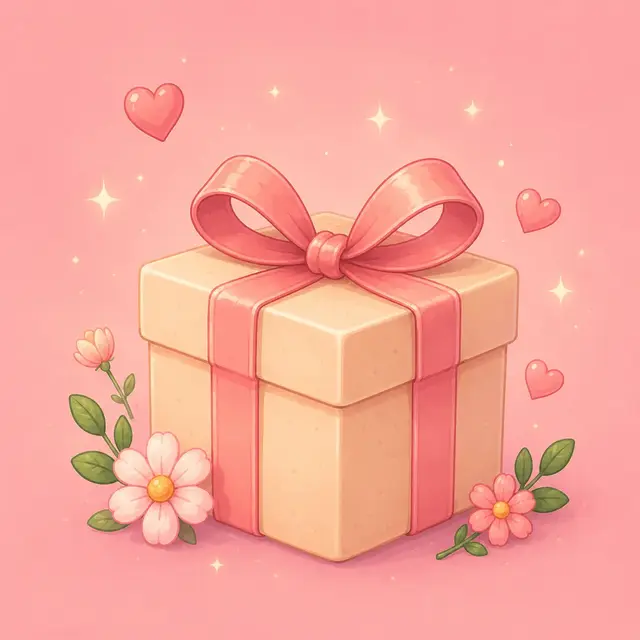
A Little Thank You
They pull the satin ribbon, the wrapping paper unfolds and your thanks are printed inside.
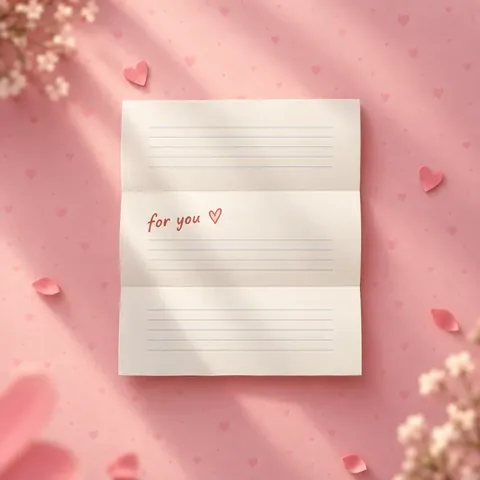
The Folded Letter
A sheet folded in three lies on a linen cloth; they lift its corner, both folds come open and the paper rises until it is a letter with your words written across it.
Good to know
Switch it on once your link is made. You get a link for friends: each one adds a message, and the person it is for swipes through every one after yours. You choose when writing closes, and the surprise stays open 14 days.
The most useful sentence in a thank-you describes the result: the deadline you met, the night you finally slept, the move that went smoothly.
Do not use a thank-you to ask for something else. Send it on its own, and ask another day.
For professional help, stay warm but a little more measured, and name the specific task so they could show the message to their manager.
Gift ideas with prices in US dollars, if you want the message to arrive with something.